<img height="1" width="1" style="display:none" src="https://www.facebook.com/tr?id=3304284026540323&amp;ev=PageView&amp;noscript=1">

Remote Refrigeration Monitoring Without a Telephone or Ethernet Connection

The POAS-E provides remote monitoring for medical refrigerators, laboratory freezers, and other temperature-controlled equipment through an existing Ethernet network connection.

Authorized users can review current conditions, manage alarm settings, access recorded data, and acknowledge alarms through a web-based portal. When the system detects a monitored condition, it can send complimentary email notifications to an unlimited number of designated contacts. Text-message and telephone-call notifications are also available with a subscription.

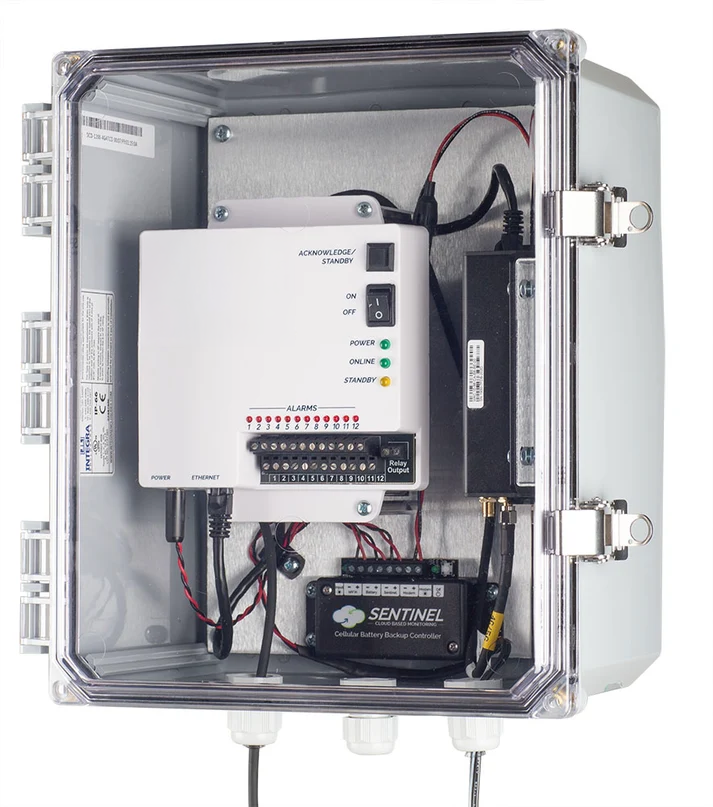
Part Number: POAS-C

Cellular Connectivity for Flexible Installation

Some refrigeration equipment is installed in areas that do not have a convenient analog telephone jack or wired network connection. Other facilities may prefer not to place a monitoring device on their internal Ethernet network.

The POAS-C addresses these situations through cellular communication. No additional customer-provided communication connection is required at the installation location, although cellular service availability must be confirmed.

This makes the system especially useful for remote rooms, detached buildings, temporary operations, distributed facilities, and other installations where a wired connection may be difficult to provide.

Subscription-Based Alarm Notifications

An active subscription is required for POAS-C alarm notifications and remote monitoring services.

When a power failure, temperature excursion, or another programmed condition occurs, the system can notify an unlimited number of designated contacts. Notification methods are selected according to the applicable monitoring plan and system configuration.

Users manage contacts, notification settings, and alarm parameters through the web portal. Alarms may be acknowledged locally at the device or remotely through the portal.

Key POAS-C Features

  • Cellular communication
  • No separate telephone line required
  • No Ethernet connection required
  • Built-in power failure monitoring
  • Subscription-based remote alerts
  • Unlimited notification contacts
  • Web portal access
  • Remote alarm acknowledgment
  • Online sensor data logging
  • Support for up to 10 additional sensors
  • Expandable after the initial installation
POAS-C

Optional temperature probe:

Optional device for measuring and tracking temperature

Receive alert notifications for temperature fluctuations. This is to be used with the Power Outage Alert System. You can also purchase an optional temperature probe to allow the alarm to alert you if the refrigerator goes out of the temperature range.

Cellular Temperature Monitoring for Refrigerators and Freezers

Optional temperature probes allow the POAS-C to monitor medical refrigerators, laboratory freezers, vaccine storage units, and other temperature-controlled equipment.

Facilities can establish acceptable high and low temperature limits. When a reading moves outside those limits, the system initiates an alarm through its cellular monitoring service.

Depending on the probe selected, the POAS-C can support temperatures ranging from standard refrigeration conditions to ultra-low freezer applications.

Expand Monitoring Beyond Temperature

With support for up to 10 additional sensors, the POAS-C can supervise several pieces of equipment or multiple environmental conditions from one cellular monitoring system.

Available configurations may include monitoring for:

  • Refrigerator temperature
  • Freezer temperature
  • Utility power failure
  • Ambient room conditions
  • Humidity
  • Water leaks
  • Equipment alarm contacts
  • Other compatible sensor conditions

The system can also be expanded after the initial purchase as a facility’s monitoring requirements change.

How the POAS-C Works

1. Install : The monitoring unit is placed near the protected equipment in a location with suitable cellular service.

2. Configure : Authorized users create their web portal access, establish alarm limits, and enter the required notification contacts.

3. Monitor : The system continuously supervises power and the connected sensors.

4. Communicate : When an alarm condition occurs, the unit communicates through its cellular connection.

5. Alert : The monitoring service sends notifications to the designated personnel according to the active subscription and configured preferences.

6. Review : Users can access the web portal to acknowledge the event, review current conditions, and examine historical sensor data.

POAS Options Table

POAS POAS-E POAS-C
Connection Method POTS Telephone Line Ethernet Connection No additional connections are required
Alarm Notification Method Phone Call Email complimentary, Text Message and Phone Calls with Subscription Subscription is required to provide any alerts
Number of Contacts Alerted Up to 4 contacts can be alerted Unlimited contacts can be alerted Unlimited contacts can be alerted
Acknowledgment of Alarm Locally, or via phone call Locally, or via web portal Locally, or via web portal
Customer Action Required On-Site phone number programming Web Portal login created, and notification settings updated Web Portal login created, and notification settings updated
Data Logging No data log available Data is logged on web portal Data is logged on web portal
Sensor Support One additional sensor available Up to 10 additional sensors available Up to 10 additional sensors available
Ability to add after initial purchase Yes Yes Yes

Applications for Cellular Equipment Monitoring

The POAS-C is designed for organizations that need remote alerts but cannot or do not want to rely on a local wired communication connection.

Potential applications include:

  • Remote vaccine storage locations
  • Pharmacies and clinics
  • Mobile or temporary medical facilities
  • Detached laboratory buildings
  • Veterinary clinics
  • Research facilities
  • Blood and specimen storage areas
  • Satellite offices
  • Equipment rooms without Ethernet access
  • Refrigeration located outside the primary facility network

Cellular Monitoring and Battery Backup Protection

A cellular alarm system can provide an important communications layer during a local power failure, particularly when the facility’s normal network infrastructure may also be affected.

When paired with a Medi-Products battery backup system, the POAS-C helps create a more complete refrigeration protection strategy. The battery backup supplies temporary emergency power, while the cellular monitoring system alerts personnel and records changing conditions.

Together, they can help staff respond to outages, equipment failures, abnormal temperatures, and events that may exceed the battery system’s available runtime.

Configure a Cellular Monitoring Solution

Cellular coverage, monitoring requirements, sensor quantities, temperature ranges, and subscription services should be evaluated when specifying a POAS-C system.

Contact Medi-Products to determine the appropriate cellular alarm and sensor configuration for your critical refrigeration equipment.

Request a POAS-C Quote