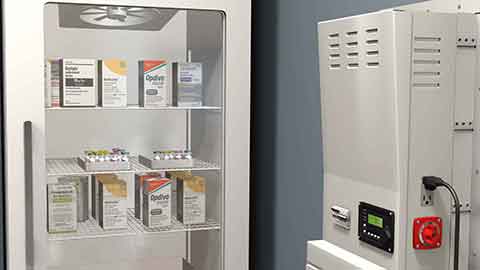
Blood banks operate with little room for error. Every unit of whole blood, red blood cells, plasma, and platelets must be stored within strict temperature ranges to preserve safety, quality, and viability. Even a brief power outage can place valuable inventory at risk, potentially leading to discarded blood products, interrupted patient care, regulatory concerns, and significant financial losses.
For architects and engineers designing donor centers, mobile blood banks and hospital laboratories, incorporating a reliable battery backup system is an important part of creating resilient facilities that support both operational continuity and regulatory compliance.
Why Temperature Control Matters
The AABB Standards for Blood Banks and Transfusion Services and FDA regulations establish requirements for the storage and monitoring of blood products throughout the cold chain. Blood storage equipment must maintain appropriate temperatures and provide continuous monitoring to ensure products remain suitable for transfusion.
Common storage requirements include:
- Whole blood and red blood cells: 1°C to 6°C (33.8F to 42.8F)
- Platelets: 20°C to 24°C (60F to 75.2F) with continuous gentle agitation
- Frozen plasma: -18°C (-0.4F) or colder (or lower depending on product type)
Should temperatures move outside these validated ranges, facilities may need to quarantine or discard affected products.
How Blood Bank Battery Backup Can Help You Remain Compliant
An emergency battery backup system helps prevent these temperature excursions by supplying uninterrupted power to blood bank refrigerators and freezers the moment utility power is lost. Unlike generators, which require time to start and transfer power, battery backup systems provide instantaneous power, allowing refrigeration equipment to continue operating without interruption. By maintaining the required storage temperatures throughout an outage, battery backup systems help protect valuable blood inventory, reduce the risk of product loss, and support compliance with AABB and FDA temperature storage requirements. For facilities where maintaining the integrity of blood products is critical, battery backup serves as an important layer of protection within an overall emergency preparedness plan.
 Medical professional at a blood bank placing a donation in a medical-grade refrigerator.
Protecting Blood Storage in Mobile Blood Banks
A mobile blood bank has different backup power requirements than a stationary donor center. Because these vehicles operate at temporary donation sites, maintaining proper storage temperatures can be especially challenging. A compact battery system, such as our SaverCell product line or any of our other compact but powerful systems suitable for mobile locations, helps prevent temperature excursions by providing uninterrupted power to the refrigerators commonly used in mobile blood banks. Its plug-and-play design, compact footprint, and space-saving installation make it well suited for mobile collection vehicles and other confined environments, helping protect valuable blood inventory wherever donations take place.
Find Out How Medi-Products' Backup Power for Blood Banks Can Support Your Specific Requirements
Power outages are unpredictable, but the impact they have on blood storage does not have to be. By incorporating an emergency battery backup system into the design of a blood bank or transfusion service, architects and engineers can help ensure critical refrigeration equipment remains operational when utility power fails. In doing so, facilities are better equipped to maintain required storage temperatures, protect valuable blood products, and support continued compliance with AABB and FDA standards. Connect with a member of the Medi-Products team for a free assessment to find the best-sized system for your facility.